

We just wrapped up another spectacular trip to the Silver Bank with the humpback whales! In the words of Conscious Breath’s Captain Gene:
We saw some exceptional behavior and one very unusual individual this week. It’s amazing how, six weeks into the season, the whales still have the capacity to surprise.
One notable example was a pair of sleepers we found Thursday, our last day on the water, but we’re too excited to wait to tell this story chronologically. Gene found the whales shortly after lunch so it was our last afternoon out on the bank. Watching the whales complete their breath cycle Gene knew there were two whales present but when he got in the water was only able to mark one. The second one hadn’t left; it was just somewhere slightly more distant and just out of sight nearby. One of the guests asked Gene if the two whales would get back together? The answer was a resounding yes, but nothing quite like anything we’d seen before.
As the solo whale rested, the second slowly came into view, curved around behind the first and glided ever-so-slowly right up along the first’s pectoral fin, coming almost cheek to cheek from an exquisitely close distance. You could see they weren’t touching, as the first, presumably female whale, gently swung and rotated her fin to avoid contact. But it was incomprehensible that two animals of such size could be so close and not be touching.
Then the two performed a slow-motion interaction that involved the second rolling on his side, the first moving from below to a parallel position on top where they both waved their pec fins and slowly rolled. Eventually they slowly pirouetted around each other again, changing positions once more before one rose vertically, using its pec fins to twist slowly while looking at the swimmers before both faded into the distance. The whole interaction took just four minutes but it felt like half an hour, it was mesmerizing. For a moment we thought the two whales were going to wake and dance with us but instead moved a short distance to settle back to rest again. There Cat’s group of swimmers witnessed a similar but shorter interaction before gliding off once again. It is impossible to put into words exactly, how to describe how the interaction transpired, it was so intimate and sensuous that it also seemed mating could be possible, too. I may post more video later after the season when better bandwidth allows but for now you can watch a slice of it by clicking here. Thanks to guest Carol Blickenstorfer for providing this video!
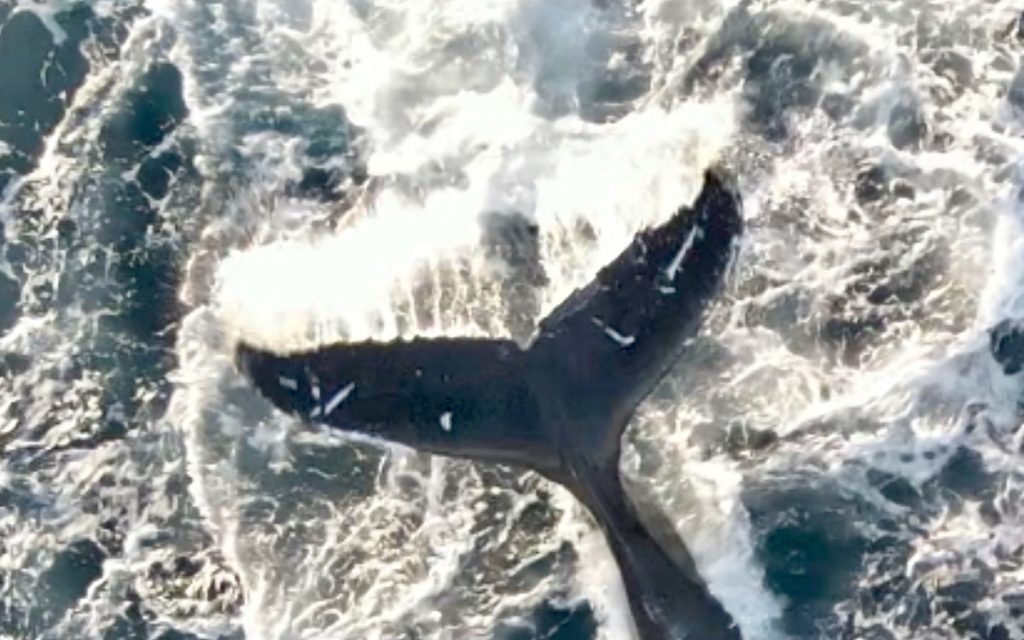
But it wasn’t only curious behaviors we saw. During breakfast one day early in the week we saw a whale being very surface active, throwing huge peduncle throws, tail lobs and pec slaps just a hundred yards from the M/V Sea Hunter on her mooring. That’s not the kind of behavior we sit idly by and just watch! We scrambled the drone to capture some of her activity from the bird’s eye point of view (watch some of it by clicking here). This included a nice aerial view of the underside of her predominantly black fluke with some distinct white markings on it.
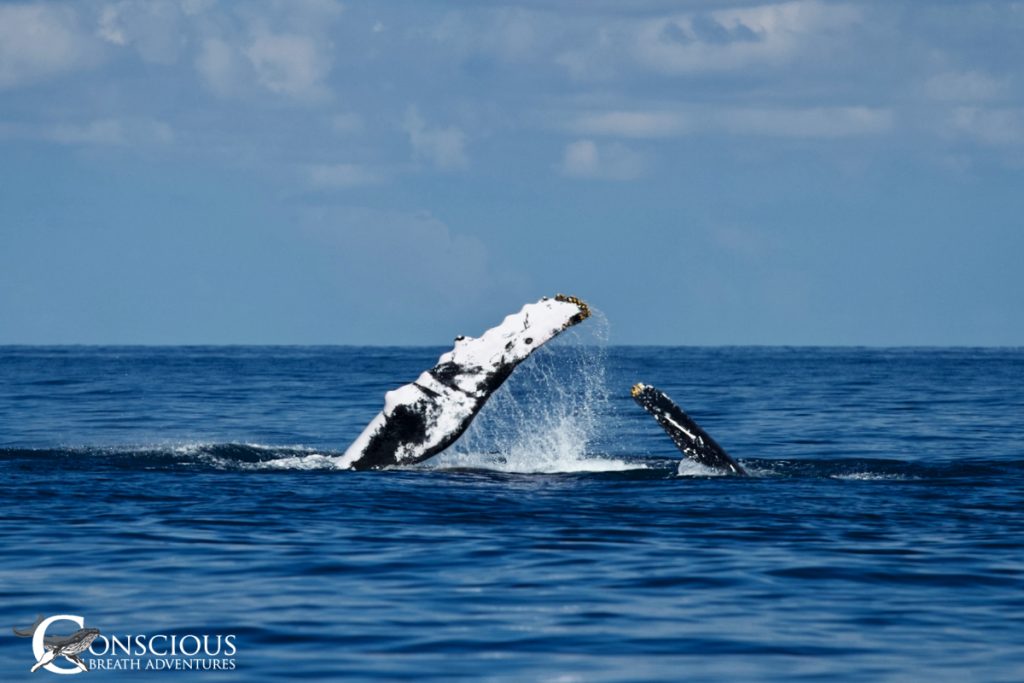
We noticed something else interesting about the coloration, too. Typically, humpbacks have very symmetrical pectoral fins: left and right have the same shape and very similar markings on both fins, usually all white or white with black markings here in the N Atlantic. But this whale’s pec fins were different! The overall shapes of the fins were very close but her right pec fin was mostly white with black markings (right) while the left was almost completely dark grey/black on top (below left) but white underneath. These two pecs are on the same whale! Completely different color schemes and most unusual because of that!
Later in the week both Gene’s and Cat’s boats saw her being very surface active again on two separate occasions, once with an escort. Gene was able to get a partial fluke photo that matched the whale to the earlier sighting but it was the pec fins that really gave it away. We know she is a female because she has a calf that was watching as mom kicked it up on both days; the calf did not participate. But mom sure did. Here are photos of both sides of both her pec fins with partial images of the fluke (underside of right pec, above right; top of right pec plus underside of left pec, left). You can see that the fins are essentially the same shape but are showing the very different coloration on top. Remarkable, and we will have to follow up on this story later. Does anyone recognize this whale?!
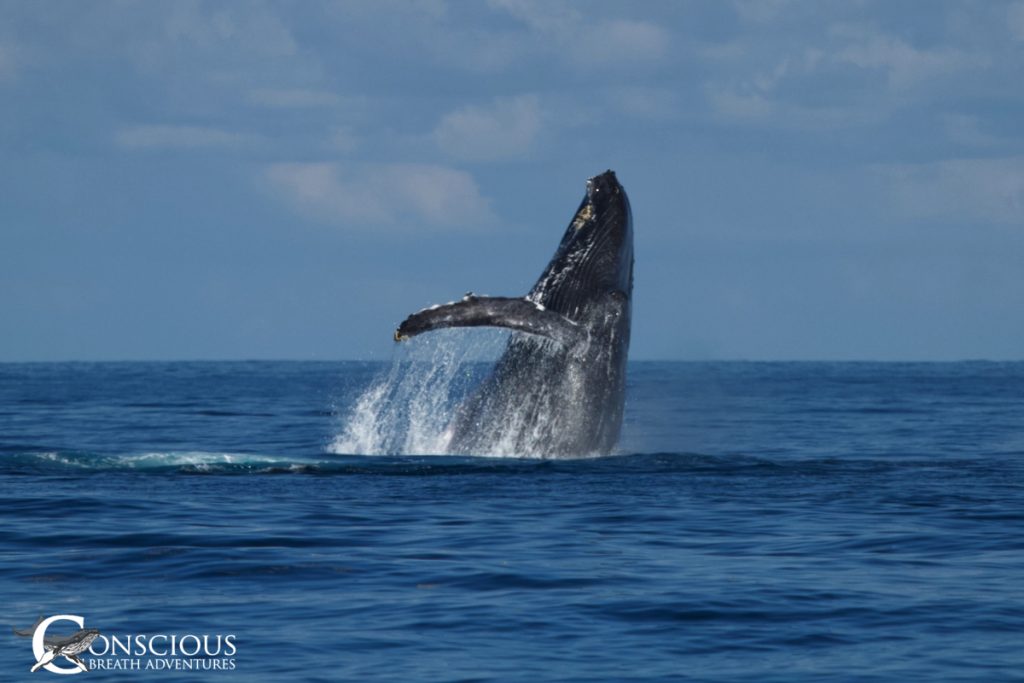
The rest of the week was as full of wonder as one might expect on the Silver Bank. We encountered singers, sleepers, the coveted curious calf, and some of the best surface action we’ve had this season, with calves breaching all the way out the water, high enough to even get an ID shot of the fluke… if we had been quick enough with our cameras! And so much breaching, near and far, a great topside show all around (see footer image; and here is our enigma whale again breaching, right).
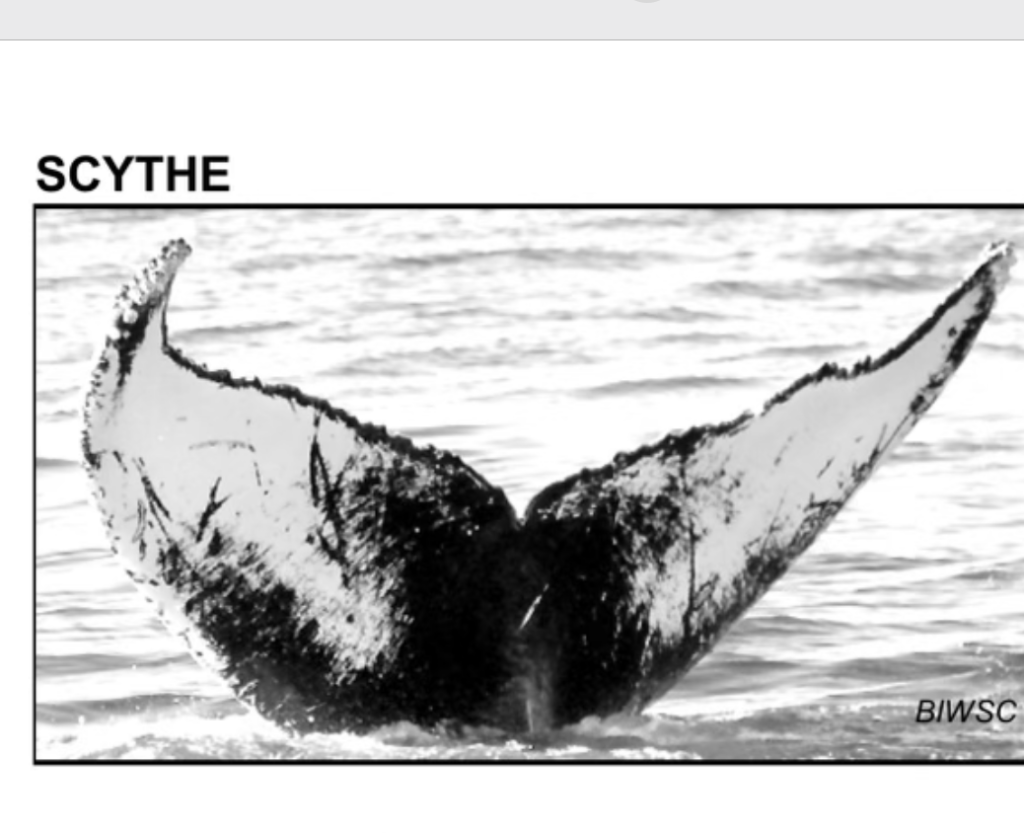
And, speaking of singers, some of our astute fluke matching guests were able to identify the previous week’s singer as a Gulf of Maine whale known as Scythe! See his images from that week (left) and his catalog image here (right).
Until next time, we wish you whale!
Capt Gene, Cat & the crew of the M/V Sea Hunter